

Ken St. Andre passed away on Sunday, November 15. He was one of the earliest remaining pioneers of the industry, most of whom have passed. As one of the first designers of a roleplaying game, he will definitely be remembered as a Giant of the Industry.
Ken’s Gaming Greats
Most of Ken’s work centers on the games that he designed in the industry’s first decade.
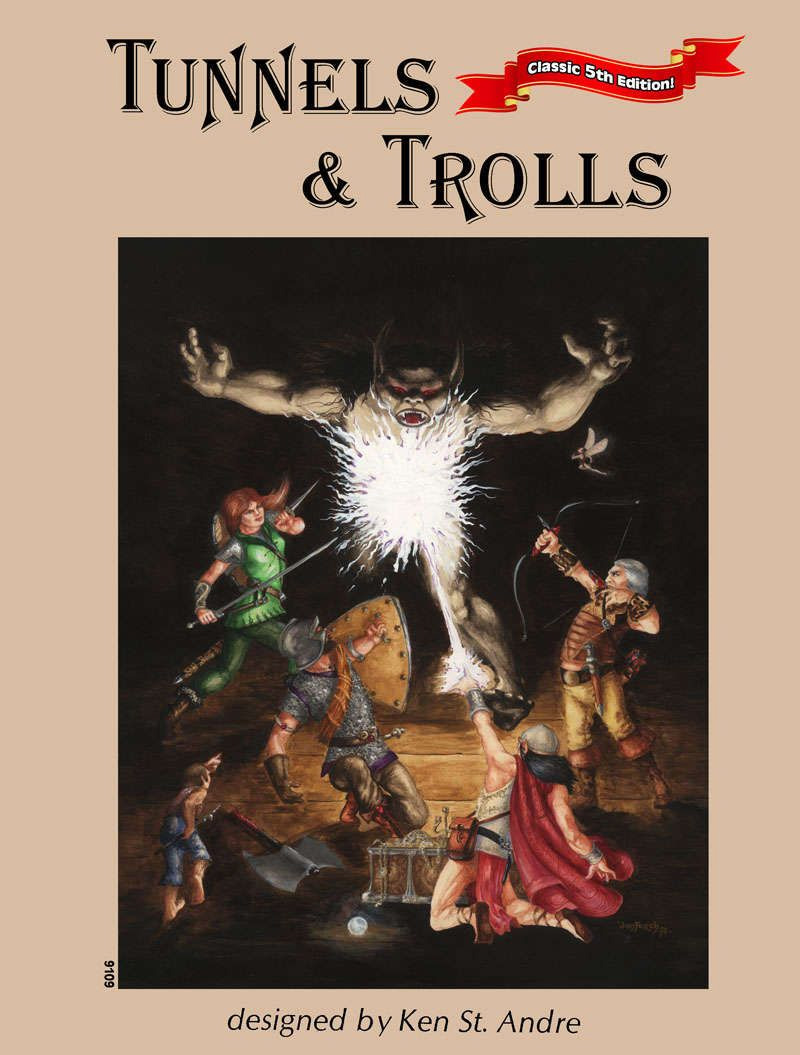
Tunnels & Trolls (1975). Ken was the (almost 30-year-old) kid who decided that Dungeons & Dragons (1974) didn’t make sense. Even beyond the complexities and confusions of the original rulebook, there was the issue of it requiring polyhedral dice that were impossible to find. But he thought the core idea for the game was “great”, so he decided to design his own version of Dungeons & Dragons without all the problems.
The result was Tunnels & Trolls (1975), where Ken proved that the lightning could be captured in the bottle once more and that roleplaying was going to be an industry, not just a single game. Was it the second RPG ever? That’s a complex question, and we can mainly say that it was one of the second RPGs alongside Boot Hill (1975), Empire of the Petal Throne (1975), and Rules to the Game of Dungeon (1975), all of which had different qualifications for whether they were professionally published RPGs (and when that publication occurred).
However, Tunnels & Trolls definitely was the first real competitor to Dungeons & Dragons. Perhaps not when Ken self-published the original edition, but it became a game for TSR to watch after it was picked up by Flying Buffalo and increasingly distributed over the years to come. It was a simpler game than D&D, which had been Ken’s goal, and definitely sillier, which made it more fun for many.
Tunnels & Trolls was supported by a plethora of adventures over the years, most of them solo and a few of the earliest also be Ken. The game boomed in the UK thanks in part to Corgi Books producing the line as paperbacks, so the solo adventures could compete with the gamebooks that supplanted simpler choose-your-own-adventure books in the 80s. Tunnels & Trolls made Flying Buffalo a roleplaying company and brought luminaries such as Rick Loomis, Liz Danforth, and Mike Stackpole into the industry. All because Ken didn’t think D&D made sense, wanted something similar, and was willing to do the design work to make it possible (reportedly, in just three days!).
Besides its early innovation (and a long gaming line that was available from Flying Buffalo for decades), Tunnels & Trolls is also notable as an early Computer RPG (CRPG) licensed from a tabletop game: Tunnels & Trolls: Crusaders of Khazan (1990) offered a very true conversion of the game system just a short time after Pool of Radiance (1988) set the CRPG field afire, and it was engrossing to play … even while it was super buggy.
- Read Grognardia’s retrospective on Tunnels & Trolls.
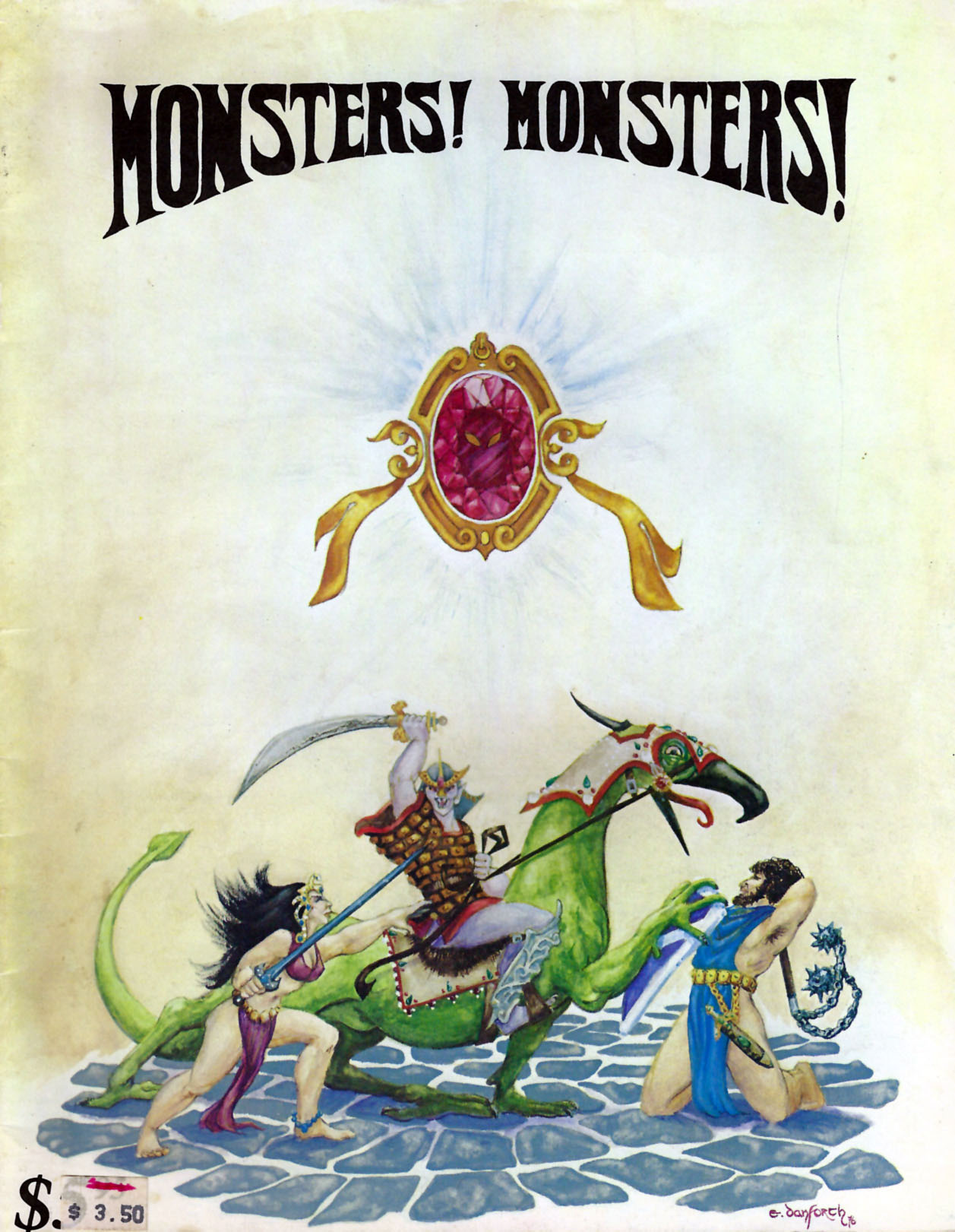
Monsters! Monsters! (1976). Can you be more innovative than creating one of the second RPGs ever? Perhaps! Because Ken moved straight from there to opening up whole new categories of gaming. One of his games that did so was Monsters! Monsters! (1976), which Ken designed in late 1975 and which ended up being published by Metagaming Concepts rather than Flying Buffalo. Fundamentally, this game was still Tunnels & Trolls, but flipped on its head, as the players now took on the role of the monsters, a first for the industry. A similar concept helped White Wolf to strike gold when they published Vampire: The Masquerade (1991), but Ken was there first by a full 15 years.
Monsters! Monsters! later was reprinted by Flying Buffalo and eventually ended up with rights reverted to Ken.
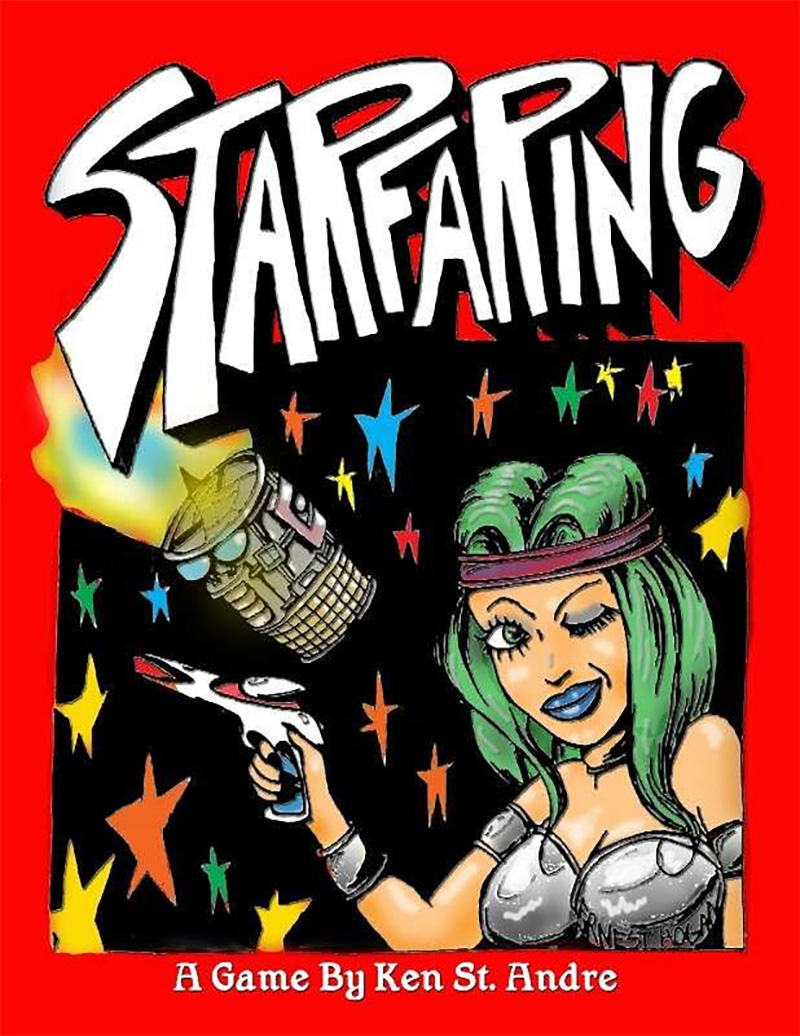
Starfaring (1976). That wasn’t Ken’s only new RPG published in 1976, as that year also saw the release of Starfaring (1976) back at Flying Buffalo. It’s in contention for being the industry’s first science-fiction RPG, although that depends on how you rate the science fantasy of Metamorphosis Alpha (1976). However, it and other forerunners would be eclipsed a year later by Traveller (1977).
Starfaring had a very unusual concept for play. It was a space opera of traveling to new worlds and meeting new life forms, but the player was a “Ship Master” who controlled an entire ship instead of just a single character. It demonstrated how wild and wooly the roleplaying field still was in those early days and that Ken was willing to really go out there and design his games to be played in innovative ways.
- Read Grognardia’s retrospective on Starfaring.
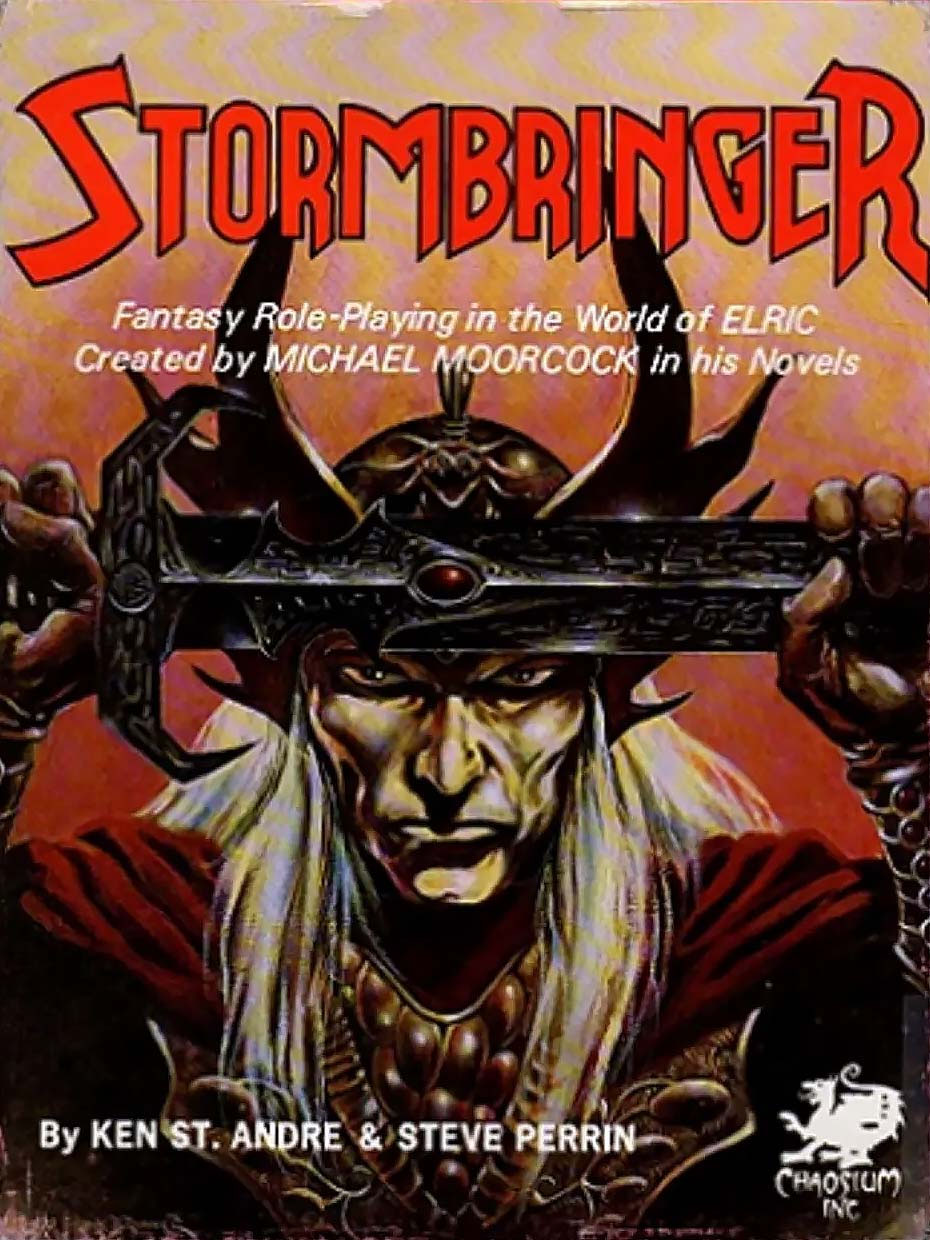
Stormbringer (1981). Ken’s final major design was Stormbringer (1981) for Chaosium. At one time, I thought it was the first licensed RPG, but it actually had two notable predecessors, Star Trek: Adventure Gaming in the Final Frontier (1978) from Heritage and Dallas (1980) from SPI. The difference was that Stormbringer stuck around for decades while the earlier ones faded away almost as soon as they were released, so call it the first successful licensed RPG.
Stormbringer is of course licensed from Michael Moorcock’s Elric novels, though some people say that it wasn’t that great of an adaptation, and certainly Chaosium later rebuilt the game as Elric (1993) to better acommodate the novels. But whether Stormbringer adapts the Elric novels well or not, it’s a pitch-perfect old-school product with its demons bound into armor and weapons, its massively powerful sorcerers, and its lethal play. Many people point toward OD&D or Basic D&D as the old-school grail, but I’d put Stormbringer right up there, especially with its focus on sword-and-sorcery play.
- Read Grognardia’s retrospective on Stormbringer.
Wasteland (1988). Many early RPG designers moved on to the computer field, and that was true for Ken too, who worked with Danforth and Stackpole to produce the computer game Wasteland (1988), a postapocalyptic CRPG with a uniquely persistent world. Its game system was based on the Tunnels & Trolls mechanics.
A Life in Words
In 1975, everyone with an idea for a roleplaying game was starting up their own company, but Ken instead let Flying Buffalo, Metagaming, and Chaosium publish his masterpieces (which means that he was literally the industry’s first freelancer, in an era before they even existed). Meanwhile, he brought books to the public in his full-time job as a librarian, which lasted through 2010. He mostly exited the roleplaying industry after his early work of the 70s, but he returned in the 21st century with a whole new, huge set of adventures and other supplements for his best-loved games.
Though Ken has passed, his creations live on. Tunnels & Trolls is being rebuilt as “Tunnels & Trolls: A New Age” by Rebellion Unplugged (though reviews are mixed on how good of a T&T game it is) and Monsters! Monsters! has been rereleased in a number of new editions in recent years, which makes it the game for players who want old-school T&T play. His many supplements, especially from recent years, also remain available.
May the Trollgodfather’s legacy be long and his name remembered.